The link between how you care for residents and how your facility performs financially is more direct than it looks. Here's the cycle.
A flexible, stable workforce
Leading facilities are reducing administrative burden with workforce management tools and supporting internal teams with independent professionals so caregivers spend less time behind a desk and more time in front of residents.
Lower turnover, more consistent care
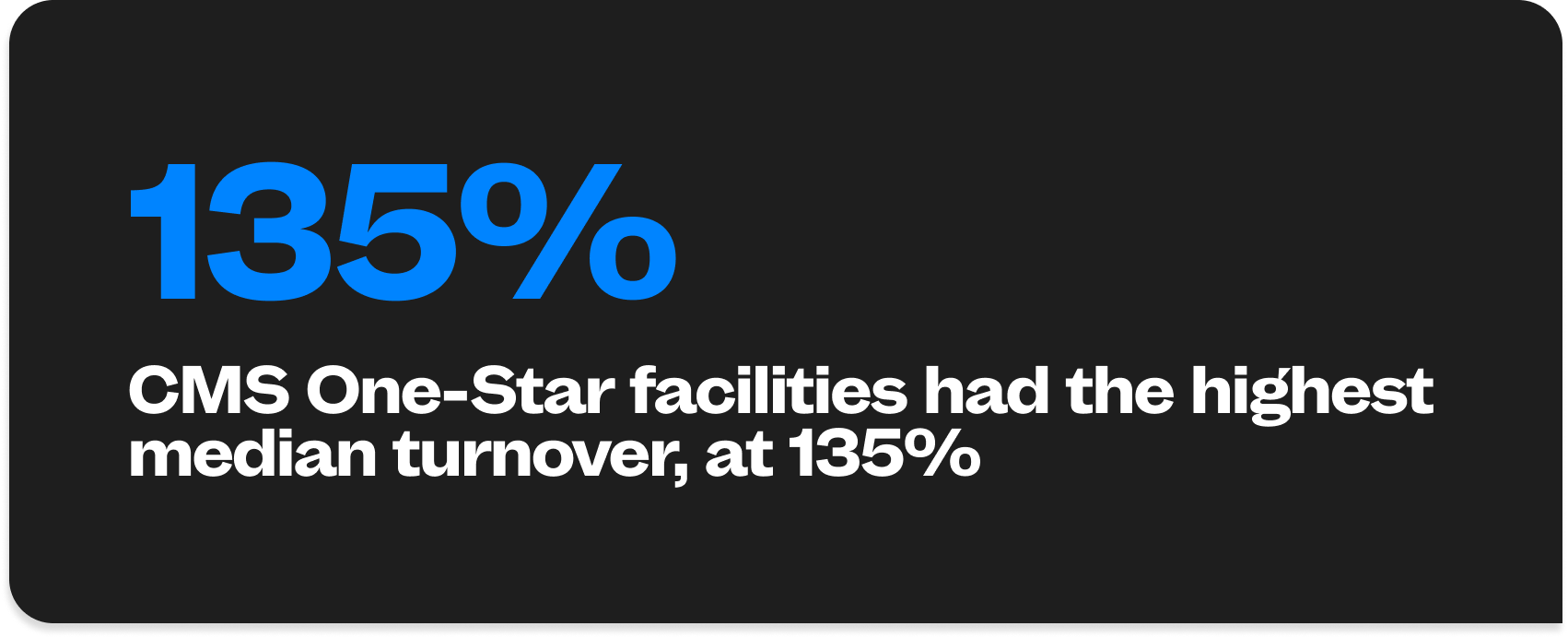
Higher turnover is associated with measurably lower quality of care. When workers have more support, burnout drops and employees stay. The same professionals return shift after shift, and residents get care continuity.
Higher care quality
Well-supported teams that can spend their time on direct care deliver better outcomes. Time otherwise lost to non-nursing tasks gets redirected to patients.
Higher CMS Five-Star ratings
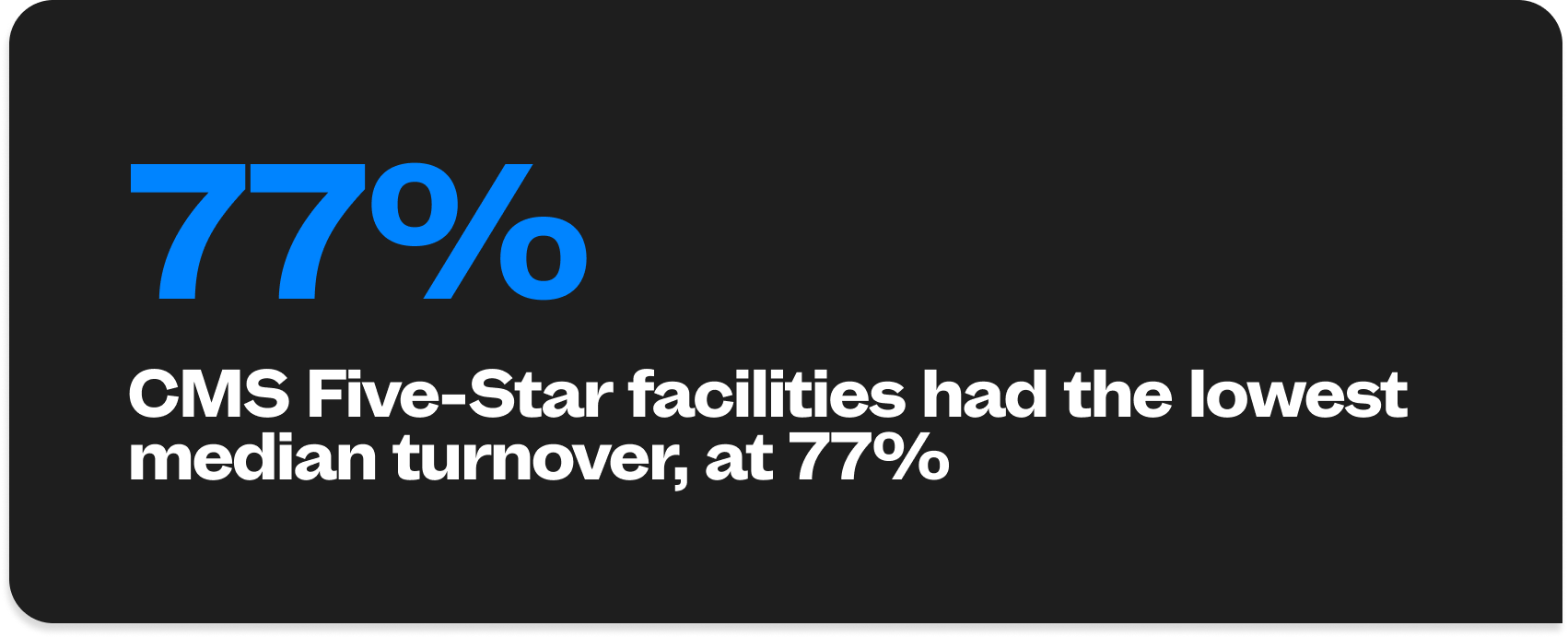
Care quality and the inspection results tied to it make up the bulk of a facility's overall rating.
Ratings move demand
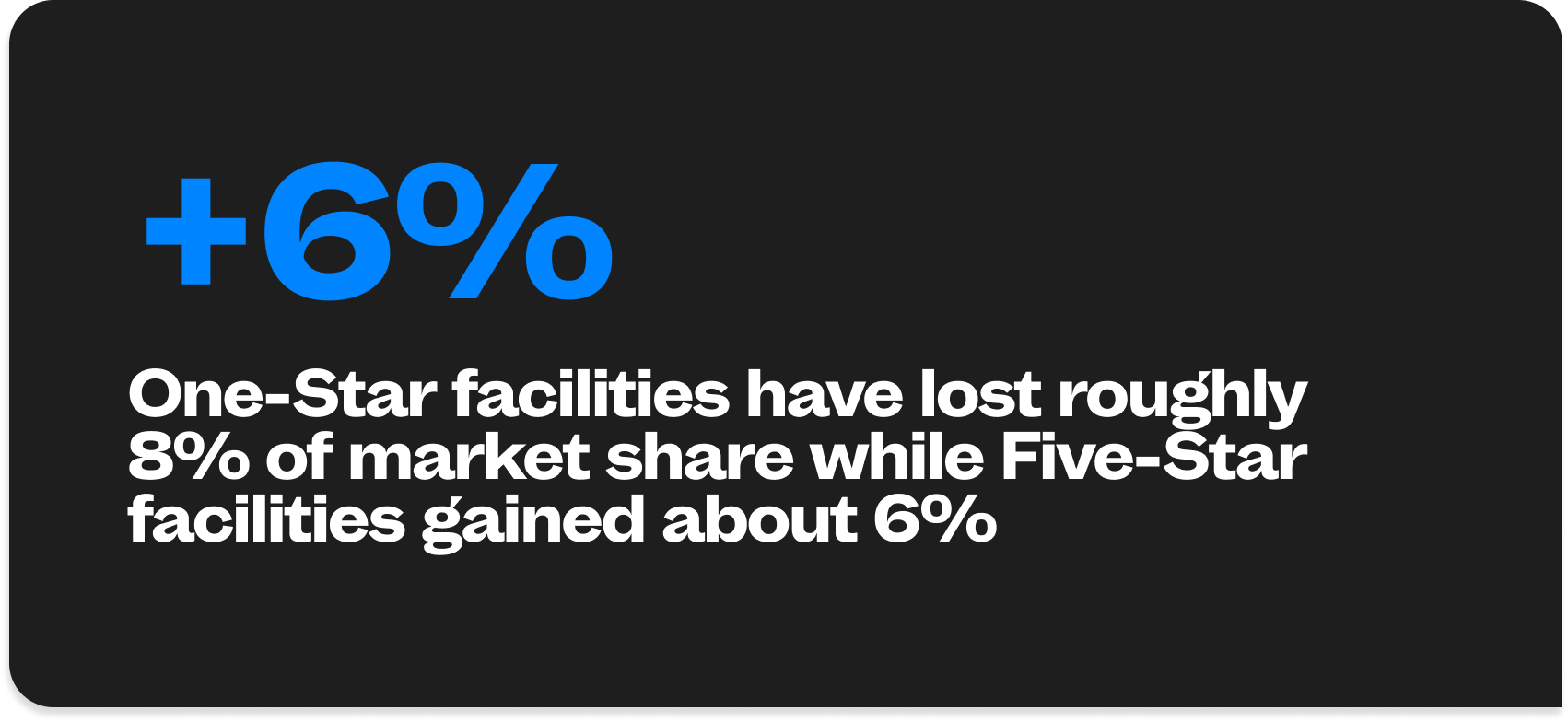
One-star facilities lost roughly 8% of market share while five-star facilities gained about 6%. Stronger inspection performance means less time solving problems and more time raising the bar: a virtuous cycle with the best operations getting better.
Stronger financial performance
Higher census plus lower regulatory exposure makes for a healthier bottom line and the capacity to reinvest in the workforce.
Workforce management solutions from OnShift and ShiftKey help you provide flexible schedules and more shift support while reducing administrative work, so you can build an environment optimized for quality care.
Sources
"Nurses' Time Allocation and Multitasking of Nursing Activities: A Time Motion Study," (PMC/AMIA Annual Symposium Proceedings).
"Health Care Staff Turnover and Quality of Care at Nursing Homes," (JAMA Internal Medicine).
"High Nursing Staff Turnover in Nursing Homes Offers Important Quality Information," (Health Affairs).
"Consumer Response to Composite Ratings of Nursing Home Quality," (American Journal of Health Economics).